Dental EndoMaster

Find the canals before you drill. Then see how close you came.

Maxillary central incisor, specimen CBCT1-MX1, recorded on screen.

Two thumbs.One access cavity.

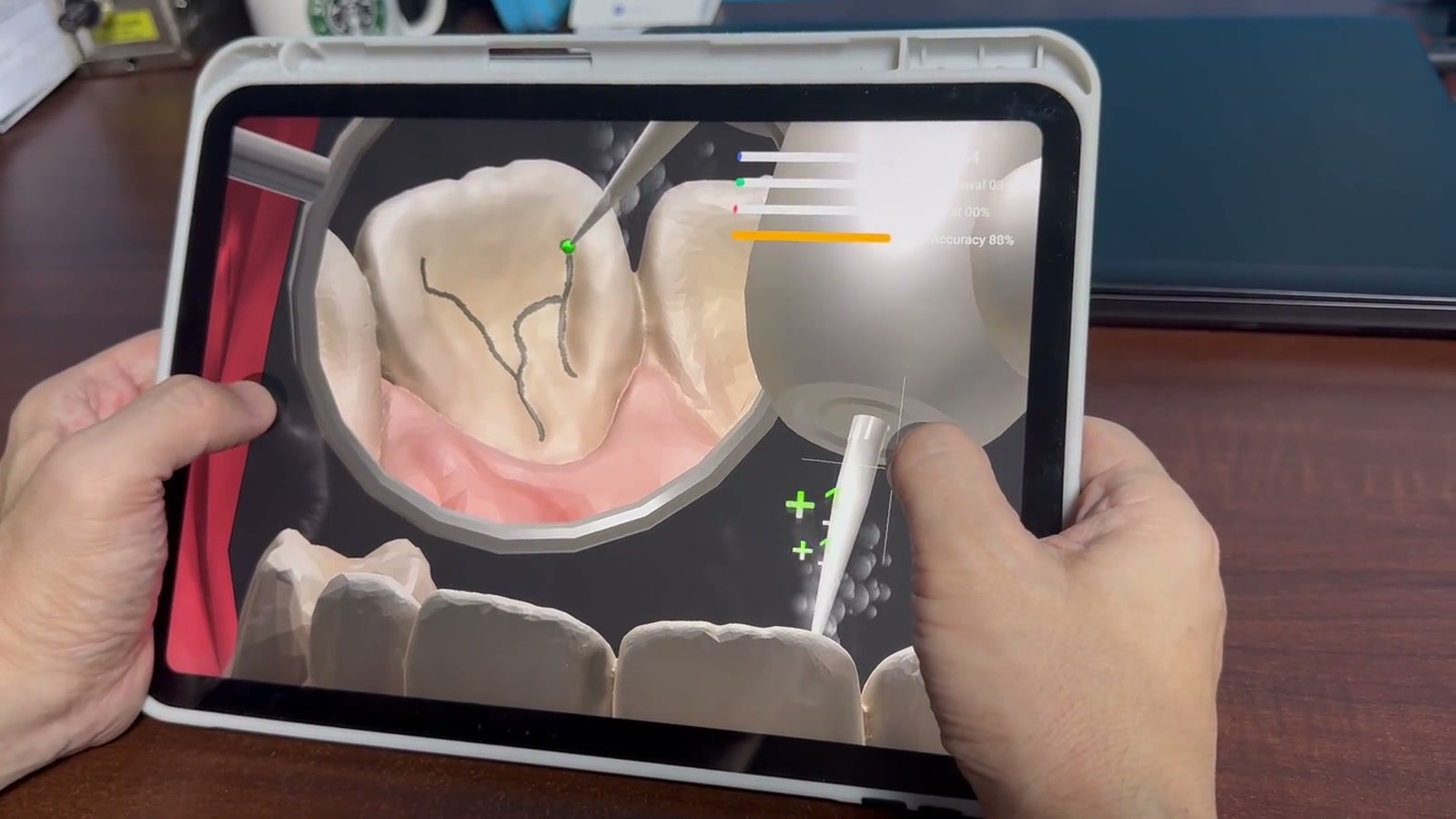
Maxillary first molar, tooth 16, on a phone held in landscape. The laptop behind mirrors the screen for the class.

  1. Laptop mirrorThe phone’s screen, shown to the class.
  2. Phone, landscapeBoth thumbs on the controls.
  1. HandpieceAngled like the one in your hand.
  2. Orifice mapOpening frame, before the cut.
  3. Bur diameter2.3 · 1.8 · 1.0 mm
  4. PrepTurns red while the bur is cutting.

“Root canal treatment is the art of treating the invisible.”

EndoMaster makes the invisible part visible, then measures your access against it.

From outlineto orifice.

Design the outline.

Plan the access on the crown first. On an upper incisor you work from the lingual, through the mirror.

Drill like you hold a handpiece.

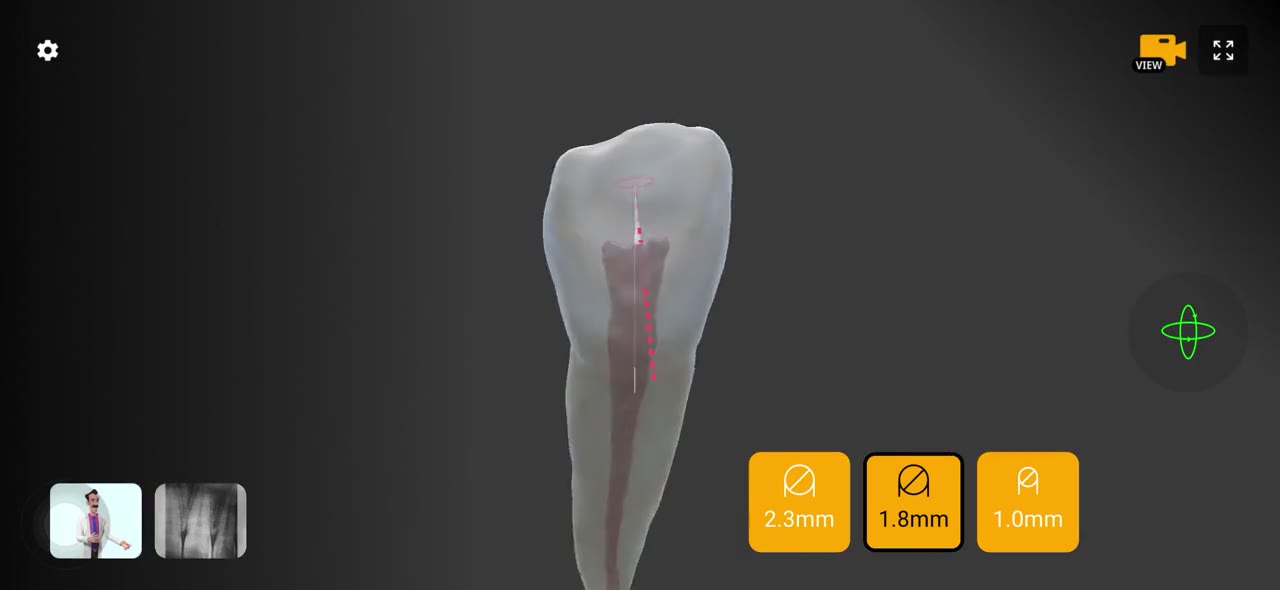
The bur follows real handpiece orientation. Pick 2.3, 1.8 or 1.0 mm, and check the synced X-ray of the same tooth.

Predict the orifices.

From the exposed pulp, mark where MB, MB2, DB and P open. Then go deeper and see if you were right.

Check it in Help View.

The tooth turns translucent, so you can see the canal against your access before you commit.

  1. Mirror viewLingual access, seen indirectly.
  2. Access pointMaxillary central incisor.
  3. Bur diameter2.3 · 1.8 · 1.0 mm
  4. X-ray, syncedRadiograph of the same tooth.
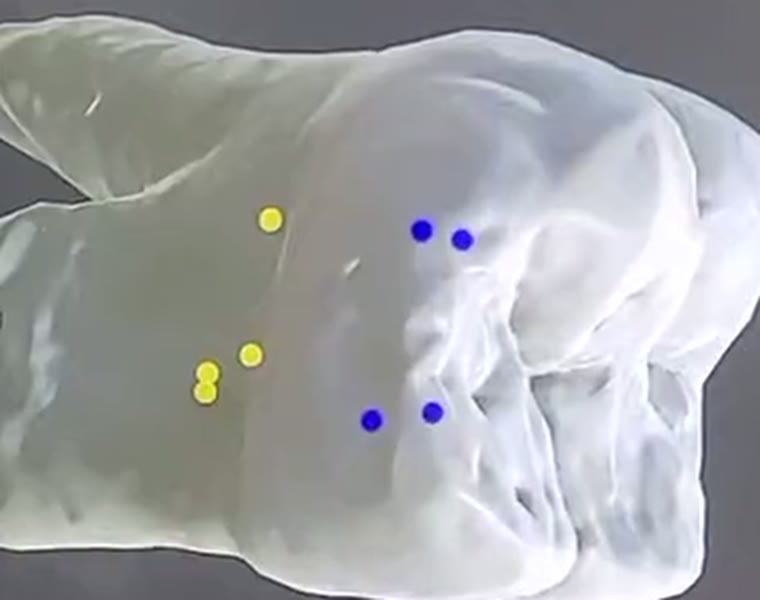
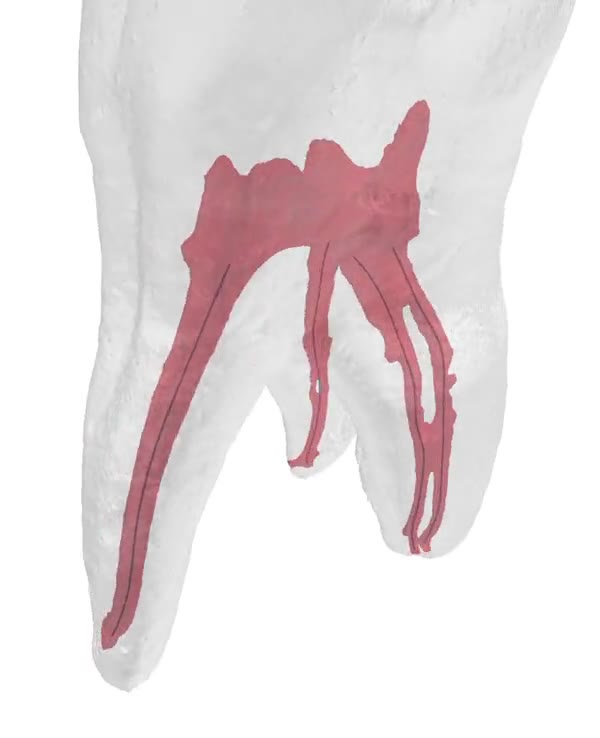
Translucent maxillary first molar model with four blue canal-orifice markers
  1. RootsSeen through the model.
  2. CrownMaxillary first molar, translucent.
  3. Canal orifices ×4MB · MB2 · DB · P
Help View: the incisor rendered translucent, its canal in red
  1. Help ViewThe whole tooth, translucent.
  2. CanalIn red, against your access.

Then it’s measured.

Four numbers, each a percentage. No guessing whether the access was good enough.

Orifice estimation

Did you predict where the canals open?

Adequate extension

Is the outline wide enough to reach them?

Over-extension

How much sound dentin went with it?

Depth appropriateness

Did you stop at the right depth?

Put next toa VR simulator.

What the research found, and what it didn’t.

Pre-clinical stress as low as the VR group.

In a randomized controlled trial with 30 fourth-year students, those who trained on EndoMaster reported stress before their first clinical case as low as the VR haptic-simulator group, and significantly lower than control. They also reported more confidence and preparedness.

What it did not show: clinical performance scores for the app group were not significantly different from control.

Usta et al. Journal of Endodontics 2026;52:337–344. doi:10.1016/j.joen.2025.11.005

Pre-clinical stress, VAS. Lower is calmer.

ControlNo simulator4.7
Dental EndoMasterPhone app3.0
VR haptic simulatorVirTeaSy2.6

Rated highest among smartphone endodontic apps.

4.0/5uMARS, overall
4.7/5Aesthetics

Ourang et al. International Endodontic Journal, 2025. Review of smartphone apps for endodontic education.

Also on record

Patent registeredFeb 2025
#1 Medical, App Store Middle EastDec 2024

Watch the cases.

Short clips of the cases and the research, posted at @dental_master_series.

SNS Challenge: post a video of your practice and get one month of Premium free.

Open the canalyou can’t see.

Dental EndoMaster for iPhone, iPad and Android.

All three apps: App Store · Google Play